
A SimCity Dream, Minus the Code
Andy Coenen is an AI controllability researcher at Google DeepMind. He also, apparently, spent his spare time in early 2026 recreating all five boroughs of New York City as an interactive isometric pixel-art map, tile by tile, without writing a single line of code by hand. The result is isometric.nyc, a giant online map you can pan, zoom, and explore, taking in landmarks like Central Park, the Statue of Liberty, JFK, and LaGuardia, all rendered in a style that will immediately remind anyone who misspent their youth in front of SimCity 2000 or RollerCoaster Tycoon.
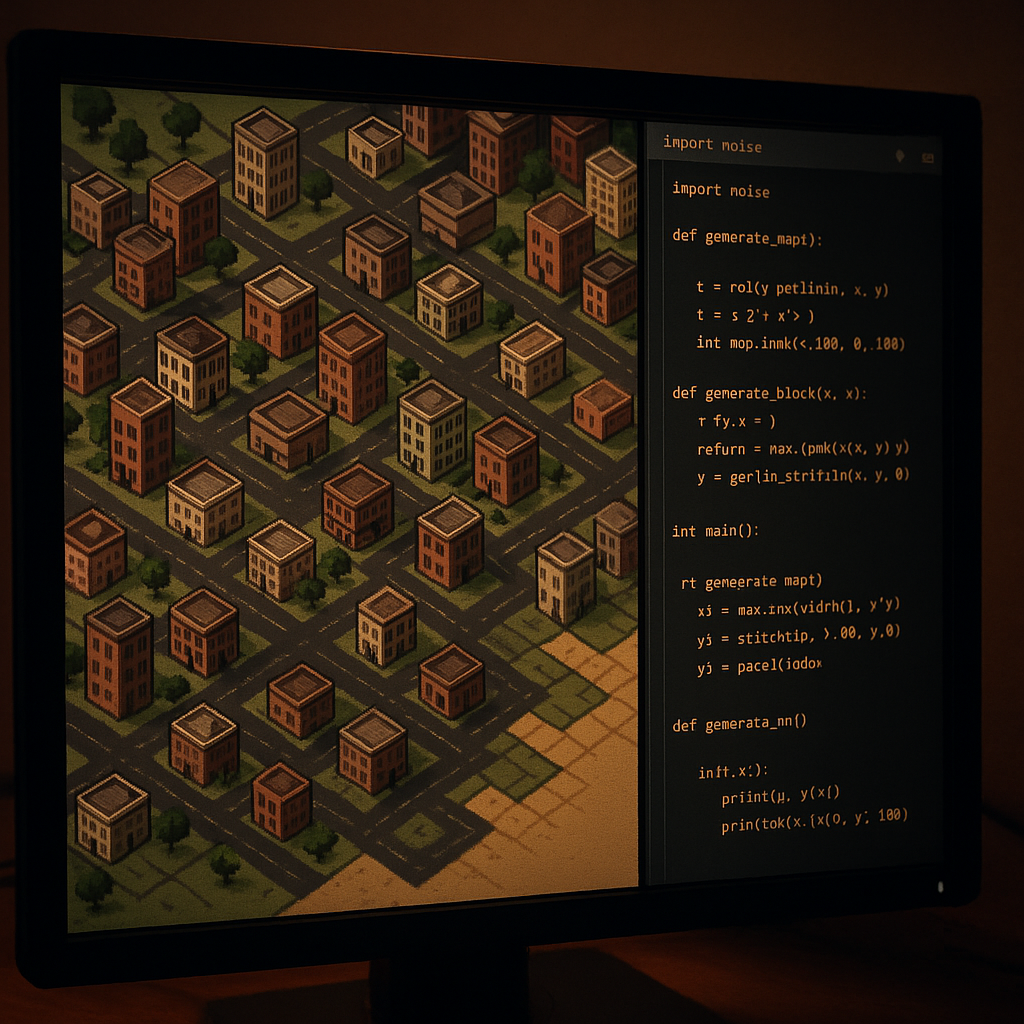
Coenen announced the project on X on January 22, 2026, describing it as built with coding agents and generative AI. It picked up over 7,700 likes the next day. Adafruit featured it within a week. The attention was enough that Coenen decided to open-source the repository shortly after.
The Pipeline That Generated a City
The early strategy relied on 3D CityGML data from sources like NYC 3D and 3DCityDB to render a "whitebox" view of individual tiles. That approach ran into trouble: too much inconsistency between the whitebox geometry and satellite imagery. Coenen pivoted to the Google Maps 3D Tiles API, which gave him precise geometry and textures inside a single renderer.
The style problem was harder. Getting tiles to look the way he wanted required fine-tuning a Qwen/Image-Edit model on a training dataset of roughly 40 input/output pairs. The whole process took about four hours and cost about $12. Once the fine-tuned model was in place, the pipeline generated the entire city tile by tile at over 200 generations per hour, at under $3 per hour.
Keeping tiles from looking like a patchwork quilt required an "infill strategy." The model generated 512x512 pixel quadrants adjacent to existing tiles using masked inputs, so that the final 1024x1024 pixel tiles stitched together without visible seams.
Coding Agents Did the Actual Coding
Coenen is direct about the codebase: it "probably sucks," he has looked at less than 1% of it, and he didn't write any of it by hand. The entire thing was built through back-and-forth collaboration with Claude Code, Gemini CLI, and Cursor, using both Opus 4.5 and Gemini 3 Pro. He says they all worked pretty well.
That is a notable data point on its own. A researcher with a clear creative vision and enough technical judgment to steer agents was able to ship a production-quality, publicly admired project without touching the implementation directly.
"The Differentiator Becomes Love"
Coenen's own framing of the project is worth sitting with. His core question going in was: "Is something that was previously impossible now possible?" He found an answer, but he also found a philosophy on the other side of it.
"If you can push a button and get content, then that content is a commodity. Its value is next to zero. Counterintuitively, that's my biggest reason to be optimistic about AI and creativity. When hard parts become easy, the differentiator becomes love."
He also made a clear-eyed observation about the current state of image generation versus code generation: "When you assign AI to create software, it can execute code, read stack traces, check for errors and self-correct. It has a tight feedback loop and understands the system it is building. However, image models have not yet reached that level."
Isometric NYC is a good artifact to study precisely because it sits at that boundary. The code was easy to delegate. The aesthetic judgment, the nostalgia-driven vision, the SimCity inspiration, the decision to pivot away from CityGML when it wasn't working, those came from a person who cared deeply about the outcome. That combination is the interesting part.