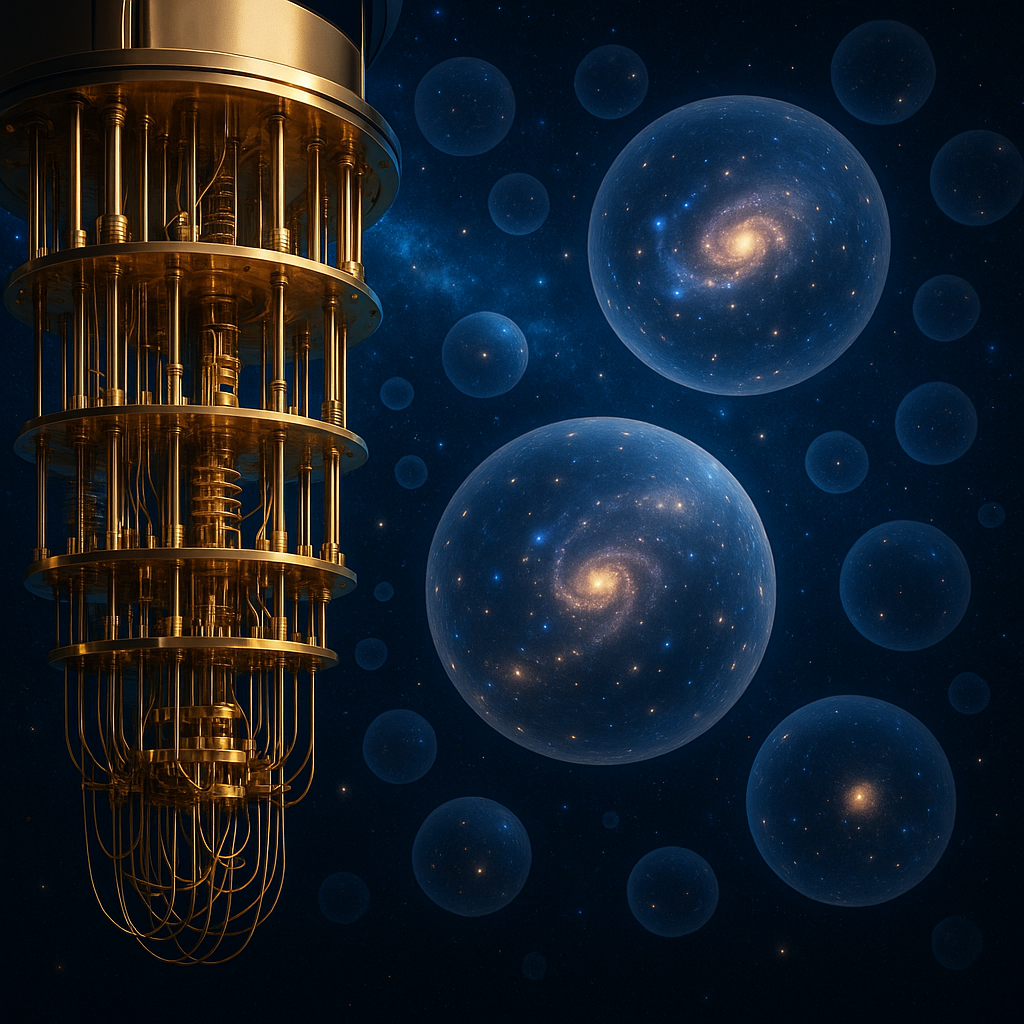
Google Quantum AI has released a new quantum processor called Willow. The results are surprising. Willow solved a test problem in less than five minutes. A normal supercomputer would need about 10 septillion years to do the same job. That is a 1 followed by 25 zeros.
Google also showed that Willow makes fewer mistakes as more qubits are added. This is important because quantum computers are very sensitive to errors. Better error control means we are getting closer to useful, large-scale quantum machines.
The announcement started a new round of debate about how quantum computers really work. Hartmut Neven, who leads Google's quantum program, described Willow's results in a way that reminded many people of the "many worlds" idea in physics. This idea says that every quantum event creates new versions of reality. In that view, a quantum computer might be spreading its work across many parallel worlds.
Many scientists do not think this is necessary. They believe quantum computers can be explained with known science, such as superposition and entanglement. These effects allow qubits to hold more information than normal bits. According to this view, no extra universes are required.
The problem solved by Willow was a Random Circuit Sampling (RCS) benchmark task which is essentially generating samples from a random quantum circuit's output distribution.
In the company's own words, the chip "performed a standard benchmark computation in under five minutes that would take one of today's fastest supercomputers ≈ 10^25 (10 septillion) years."
In addition, the chip achieved a major error-correction milestone: as the system scaled up (from 3×3 to 5×5 to 7×7 encoded qubit grids) the error rate was cut in half, marking a "below threshold" regime where adding more qubits reduces error rather than increasing it.
No matter which idea is correct, Willow is a major step. It shows that quantum computing is becoming real, not just theory. It also encourages people to think about deeper questions: How does the universe work? What is information? And how far can new technology take us?
The original URL to the Google blog post is: https://blog.google/technology/research/google-willow-quantum-chip/