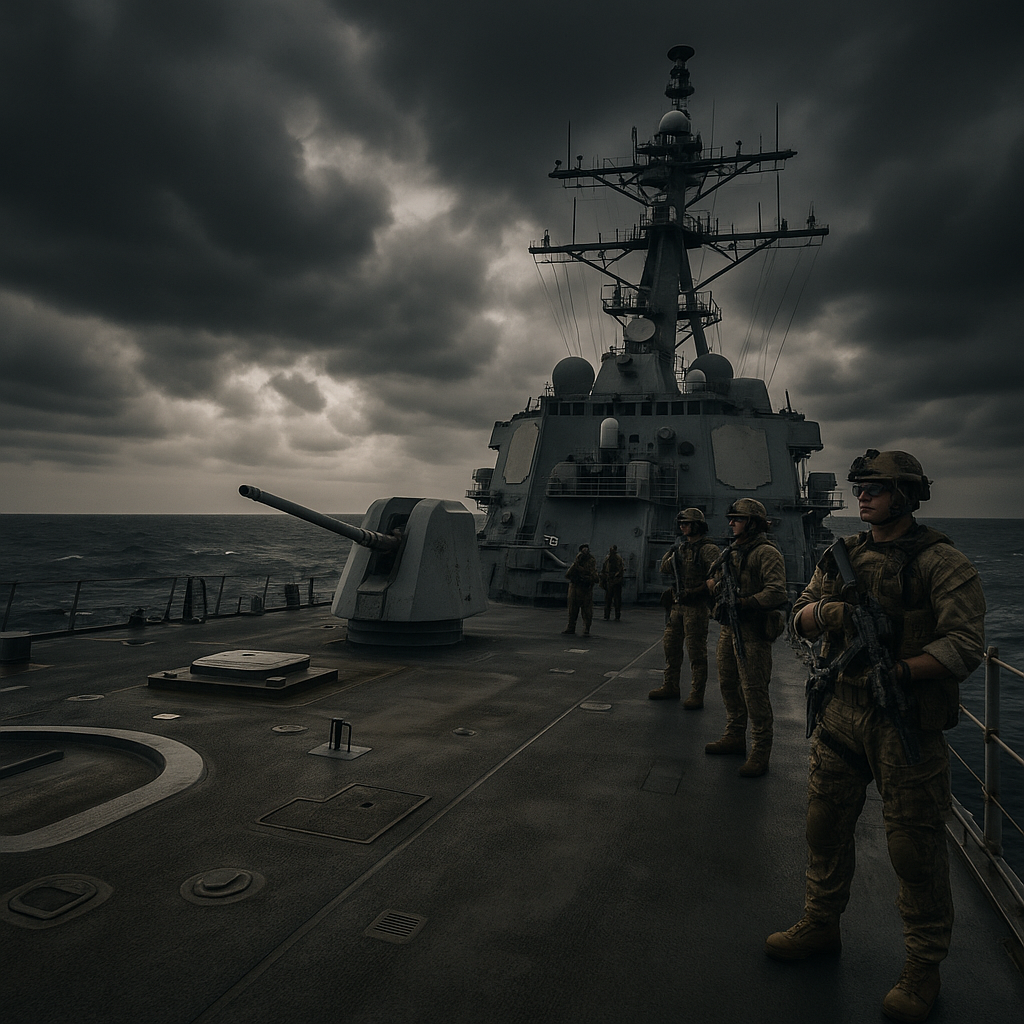
Armed US military personnel were preparing to board a Chinese vessel in the Middle East. Military planes were already airborne. The operation was moments away from executing. The intelligence report that triggered all of it was, according to one source cited by CNN, "entirely false."
CNN's September 18, 2026 exclusive reconstructed what may be the closest the US and China have come to a direct military confrontation in years, and the proximate cause was an AI chatbot hallucination. The incident occurred in spring 2026, while the US was at war with Iran. An analyst attached to a special operations command unit queried a chatbot about intelligence reporting on a Chinese ship's cargo manifest, material originating with US Special Operations Command Pacific, based in Hawaii. The chatbot combined, in CNN's words, "open-source intelligence with secret signals intelligence" and concluded the ship was transporting components of a nuclear weapons program. The analyst then used AI a second time to package those findings into a standard intelligence report format and disseminated it across the military. Officials acted on it. CNN was never able to determine what the ship was actually carrying.
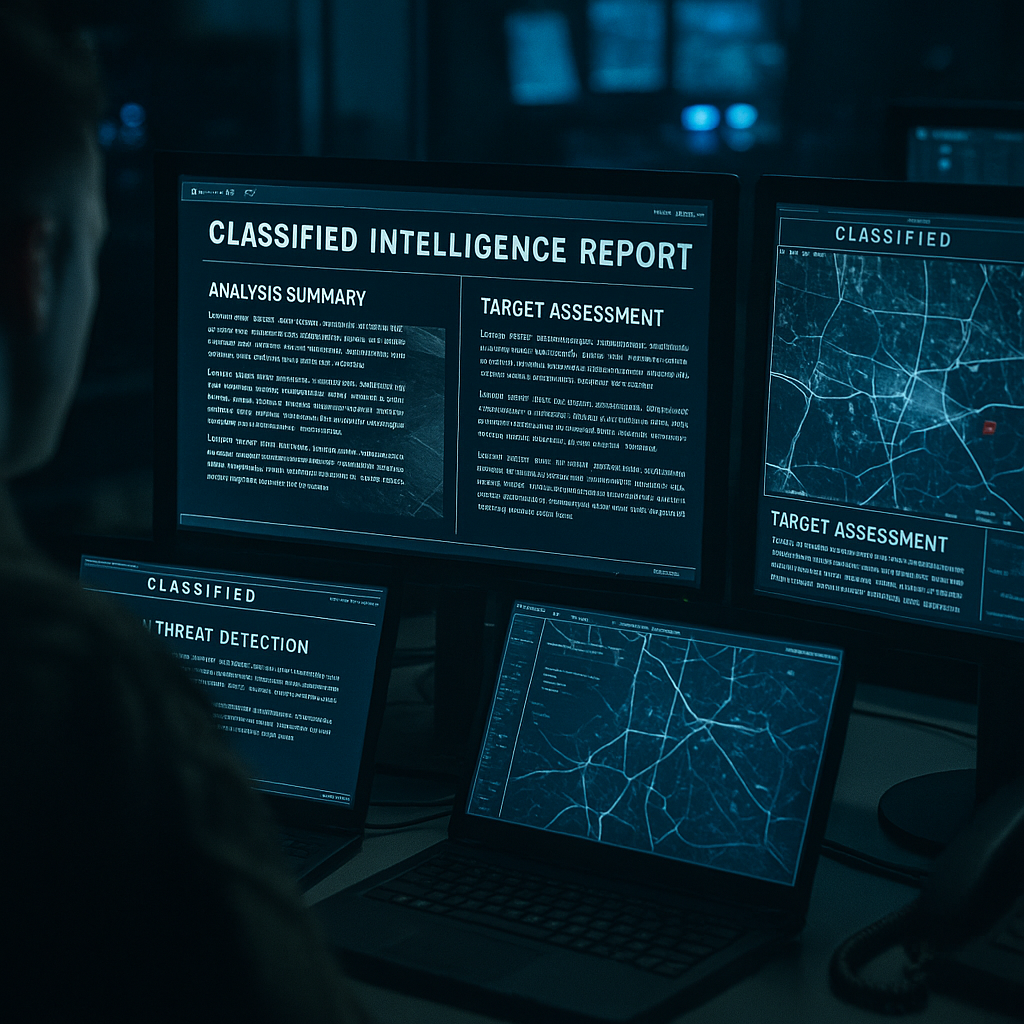
It was only just before the planned boarding that someone dug deeper, found the AI-generated origin of the report, and recognized that the chatbot had misidentified the cargo. The operation was called off. One source told CNN the incident "almost started a war," noting that a US military operation against a Chinese ship could easily have escalated into armed confrontation between Washington and Beijing. Neither US Special Operations Command Pacific nor the Pentagon responded to CNN's requests for comment.
This incident did not happen in a vacuum. On January 9, 2026, the Department of War released its Artificial Intelligence Acceleration Strategy, accompanied by a memo declaring that "AI-let warfare and AI-let capability development will redefine the character of military affairs over the next decade" and that the American military must become "an AI-first warfighting force across all components, from front to back." Defense Secretary Pete Hegseth put it bluntly in his own framing: "We will let loose experimentation, eliminate bureaucratic barriers, focus our investments and demonstrate the execution approach needed to ensure we lead in military AI." The strategy is the department's third AI acceleration push in four years, but this one sets explicit timescales, including a requirement to incorporate new AI models within 30 days of their availability. The DoD has also expanded internal AI platforms through GenAI.mil and integrated commercial models including Google's Gemini and xAI's Grok. In July 2025, the US government awarded Google a $200 million contract to support AI solutions at the Defense Department. The Pentagon's "Agent Network" program uses AI tools to scan defense intelligence and operational systems and present options to commanders, with the stated aim of accelerating battle management, targeting, and decision support.
The rationale the Pentagon offers for this pace is straightforward: AI can help the military make battlefield decisions faster, and officials argue the US cannot afford to fall behind potential adversaries, specifically China, in integrating these tools. That logic is not unreasonable in the abstract. The problem is that speed and accuracy pull in opposite directions when the underlying technology is prone to confident, authoritative-sounding errors. One anonymous US intelligence official put it plainly to CNN: "AI allows you to get to a bad idea faster."
What makes the Chinese ship incident particularly troubling is that the hallucination traveled all the way up the chain of command before anyone questioned the sourcing. According to CNN's reporting, senior officials were acting on the report, not just junior ones. And this was not a one-off failure. One of CNN's sources said hallucinations of this kind have not been isolated events across the intelligence community since AI tools began proliferating through government. Several sources told CNN that younger analysts are more likely to trust AI outputs uncritically, a dynamic that some senior intelligence officials, even those who broadly support military AI adoption, find alarming. The pressure to produce and disseminate intelligence faster is real, and when AI generates a document that looks like a finished intelligence product, the friction that might otherwise prompt a second look disappears.
Jake Steckler, a research scholar at GovAI and a veteran US Army officer, told TechCrunch: "It's important for service members to understand the uncertainty inherent to LLMs. But it's especially critical for any decisions that could lead to use of force, like targeting, intelligence analysis, or operational planning." That framing is precise and worth sitting with. Large language models do not reason about what they don't know. They generate plausible-sounding outputs based on patterns in training data, and when asked to synthesize classified signals intelligence with open-source reporting, they will produce something that looks authoritative regardless of whether it is. The January 2026 strategy memo, as critics at The Nation have noted, offers no real guidance on how to ensure compliance with laws of armed conflict, leaves no room for adequate congressional oversight, and says nothing about coordinating with allies before AI-assisted decisions propagate into operational planning.
The Pentagon's goal of putting "America's world-leading AI models directly in the hands of our three million civilian and military personnel, at all classification levels" is stated in the strategy memo itself. Democratizing access to powerful tools is not inherently wrong. But the Chinese ship episode illustrates what happens when access outpaces the institutional discipline to verify what those tools produce before acting on it. Planes were in the air. Troops were ready to board. The margin between an AI hallucination and a shooting incident between two nuclear-armed powers was a last-minute document review.